Choose by the job and the care label. A wooden spoon and a silicone spatula need not compete for the same place in your drawer. One may suit stirring a meal while another makes it easier to scrape a mixing bowl. The best combination is the one you reach for and can maintain.
When a wooden utensil may suit you
If you like a firm tool for stirring, mixing or serving, compare a wooden spoon or turner. Check the width and shape of the working end against your pans and bowls. A broad flat tool and a curved spoon have different uses even when both are made from wood.
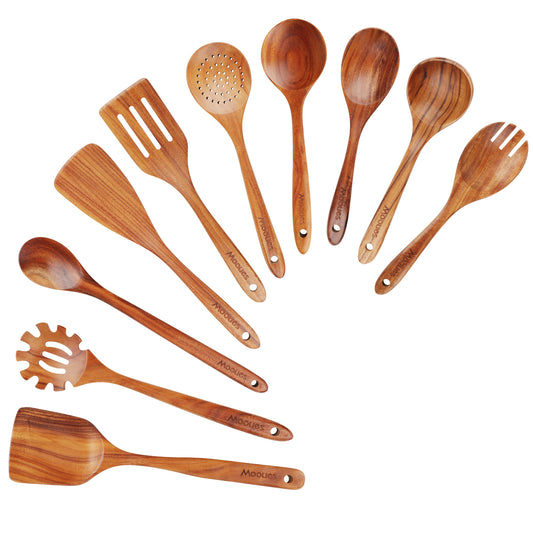
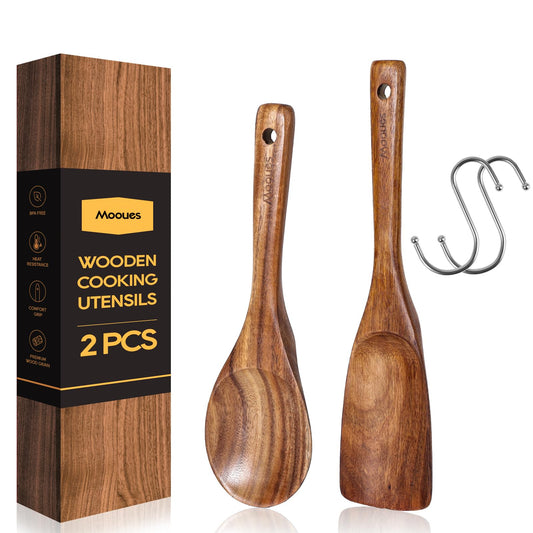
For Mooues teak tools, plan to wash by hand and allow full drying before storage. If that routine fits the way you clean up, wood can be a practical part of your everyday selection. See the teak utensil buying guide for the specific considerations.
When to consider a silicone tool
If you want an edge that flexes around a bowl, look for a silicone spatula designed for scraping. Flexibility varies with the head, its thickness and any internal support, so compare the exact product rather than buying on the material name alone.
Cleaning rules also depend on construction. For example, Le Creuset’s own care instructions distinguish all-silicone tools from silicone heads with wooden handles: the wooden handle requires hand washing. This illustrates why “silicone” does not automatically mean that the whole utensil can go in the dishwasher. Follow the directions for the product you buy.
A practical comparison
- Stirring and serving
- Compare the head shape, depth and handle. A deeper spoon holds food differently from a flat turner; material is only one part of the choice.
- Scraping a bowl
- A flexible edge can follow a curved surface. Check whether the particular silicone head has the flexibility you want.
- Cleaning
- Mooues teak utensils require hand washing. For silicone or mixed-material tools, check whether the manufacturer permits a dishwasher cycle and whether parts separate.
- Cookware compatibility
- Use your cookware maker’s recommendations. Inspect the working edge and avoid using a damaged tool; neither material name is a guarantee for every coating.
- Heat
- Look for the exact product’s limits. Do not transfer a temperature rating from one brand or material to another tool.
Try a small, useful combination
Think through a meal you make often. You might want a spoon for stirring sauce, a turner for moving food and a flexible spatula for the mixing bowl. Keep the tools that solve those jobs; you do not need to replace a useful utensil just to make the drawer match.
Choosing the wooden part of your toolkit
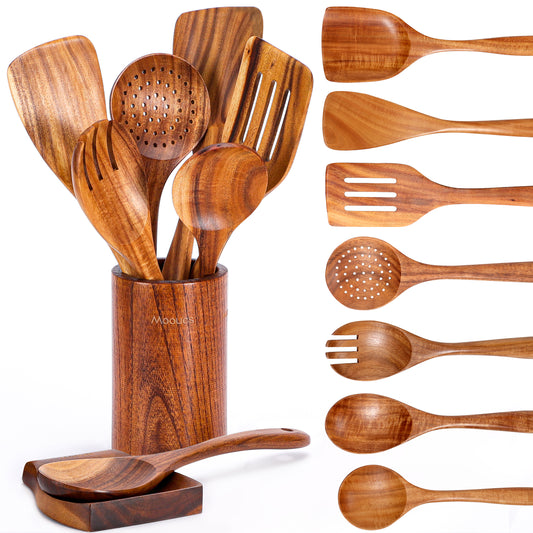
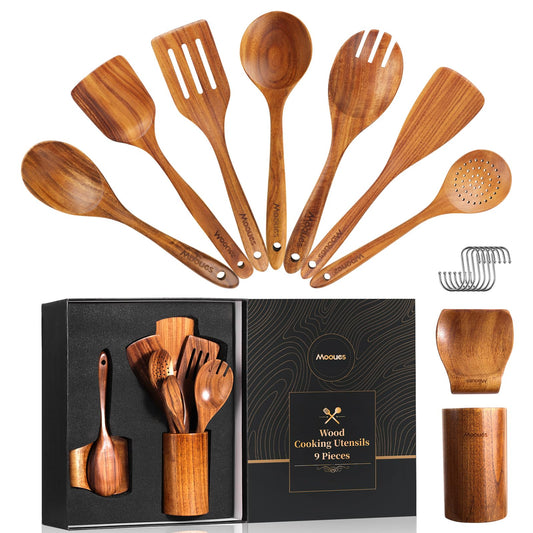
The Mooues nine-piece set combines seven tools with a holder and spoon rest. If you already have storage and only need one shape, browse individual wooden utensils as well. Our shape-by-shape guide explains the jobs to compare.
This is a buying guide, not a comparative laboratory test. Mooues teak examples describe the linked listings; another brand’s care directions apply to its own products.